BiXPower XP330 | Modular Portable AC Power
BiXPower XP330 322Wh Portable Power Station with 300W Pure Sine Wave Inverter
More Flexibility. Easier Maintenance. Power Wherever You Need It.
The BiXPower XP330 combines a compact, lightweight 322Wh rechargeable lithium-ion battery with a separate 300W pure sine wave inverter to deliver 110V AC power for compatible electronics, chargers, appliances and portable equipment.
Unlike many conventional all-in-one portable power stations, the XP330 keeps the battery and inverter separate. This modular design makes it easier to replace individual components, carry spare batteries for extended runtime, simplify maintenance and adapt to changing power needs.
322WhBattery Energy
300WInverter Rating
110VPure Sine AC
4.3 lb Battery Weight
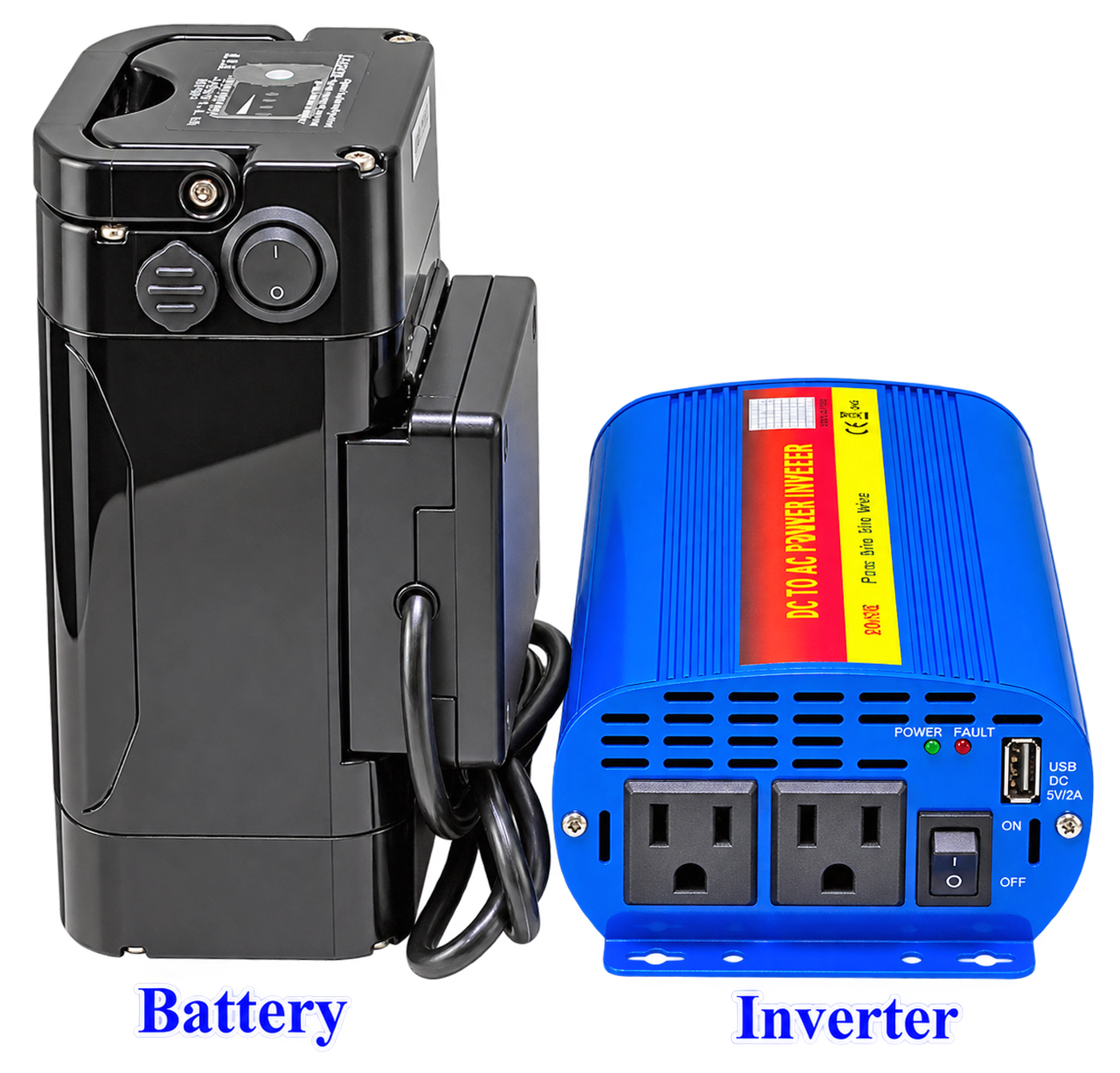
BiXPower XP330 modular portable power station
Why Choose a Modular Battery and Inverter System?
Most all-in-one portable power stations combine the battery, inverter and other electronics inside one enclosure. Although convenient, this construction may limit replacement flexibility and make repairs more complicated.
The XP330 uses separate battery and inverter components, offering important practical advantages for customers who want reliable portable AC power with long-term flexibility.
1. Replace the Battery Without Replacing the Inverter
Rechargeable batteries gradually lose capacity through use and aging. When the battery reaches the end of its useful life, simply replace it with a compatible battery and continue using your existing functional inverter.
2. Replace or Upgrade the Inverter Independently
If the inverter needs repair or replacement, there is no need to discard a functioning battery. A different compatible inverter may also be used when your requirements change, provided its voltage, current, wiring and protection requirements match the battery.
3. Carry Spare Batteries for Longer Runtime
Keep additional compatible, fully charged batteries available. When one battery becomes depleted, turn off the inverter, disconnect the battery and replace it with another charged battery. This increases total available runtime without purchasing additional inverters.
4. Lightweight, Easy-to-Carry Battery
The XP330 battery weighs approximately 4.3 lb, while the inverter weighs approximately 2.1 lb. Carrying the components separately can be easier than lifting one combined unit. The compact lithium-ion battery also provides substantial weight savings compared with many conventional lead-acid battery systems.
5. More Flexible Heat Management
Power inverters generate heat during operation. Separate housings allow the inverter to be positioned where cooling airflow is adequate, without placing all inverter-generated heat inside the battery enclosure. Proper thermal management can help protect battery performance and longevity.
6. Potentially Lower Long-Term Ownership Cost
When one component fails or wears out, replace only that component. This can reduce replacement costs compared with purchasing a complete new power station, depending on component pricing and availability.
7. Easier Troubleshooting and Maintenance
The battery, inverter, charger and connection cables can be inspected or tested independently by qualified personnel. This makes it easier to identify which component requires attention.
8. Flexible Placement and Installation
Position the battery and inverter independently in suitable, dry and ventilated locations. Properly rated cables may allow greater placement flexibility than a permanently integrated system. Keep DC cables as short as practical to reduce voltage drop and heating.
9. Less Electronic Waste
Continue using functioning components rather than discarding an entire power station because one part has worn out. This modular approach can reduce unnecessary electronic waste and encourage responsible battery recycling.
10. Better Backup Power Flexibility
Maintain a spare charged battery for unexpected power outages, travel or outdoor activities. The same compatible inverter can be used with replacement batteries sequentially.
Important distinction: A modular system is not necessarily lighter or more efficient overall than every integrated power station. Its strongest advantages are easier handling of separate components, independent replacement, maintenance flexibility and the ability to swap compatible batteries.
Modular vs. All-in-One Portable Power Stations
| Feature | BiXPower XP330 Modular System | Typical Integrated Power Station |
|---|
| Battery replacement | Battery can be replaced independently | May require internal servicing or complete replacement |
| Inverter replacement | Inverter can be replaced separately | Often requires internal repair |
| Extended runtime | Swap compatible charged batteries sequentially | Depends on available expansion features |
| Transportation | Carry battery and inverter separately | Usually carry the entire unit |
| Heat management | Flexible separate component placement | Shared enclosure with integrated cooling |
| Maintenance | Independent component testing | May require specialized service |
| Upgrade flexibility | Compatible components can be changed separately | Often limited by integrated design |
| Initial setup | Requires connecting battery and inverter | Usually ready to operate as one unit |
Some premium integrated power stations also offer removable batteries, external expansion modules or serviceable electronics. Actual differences depend on the specific products.
322Wh High-Capacity Rechargeable Lithium-Ion Battery
The XP330 includes a compact BX24H99B rechargeable lithium-ion battery with 322Wh rated energy capacity, 12.8Ah capacity and 25.2V nominal voltage.
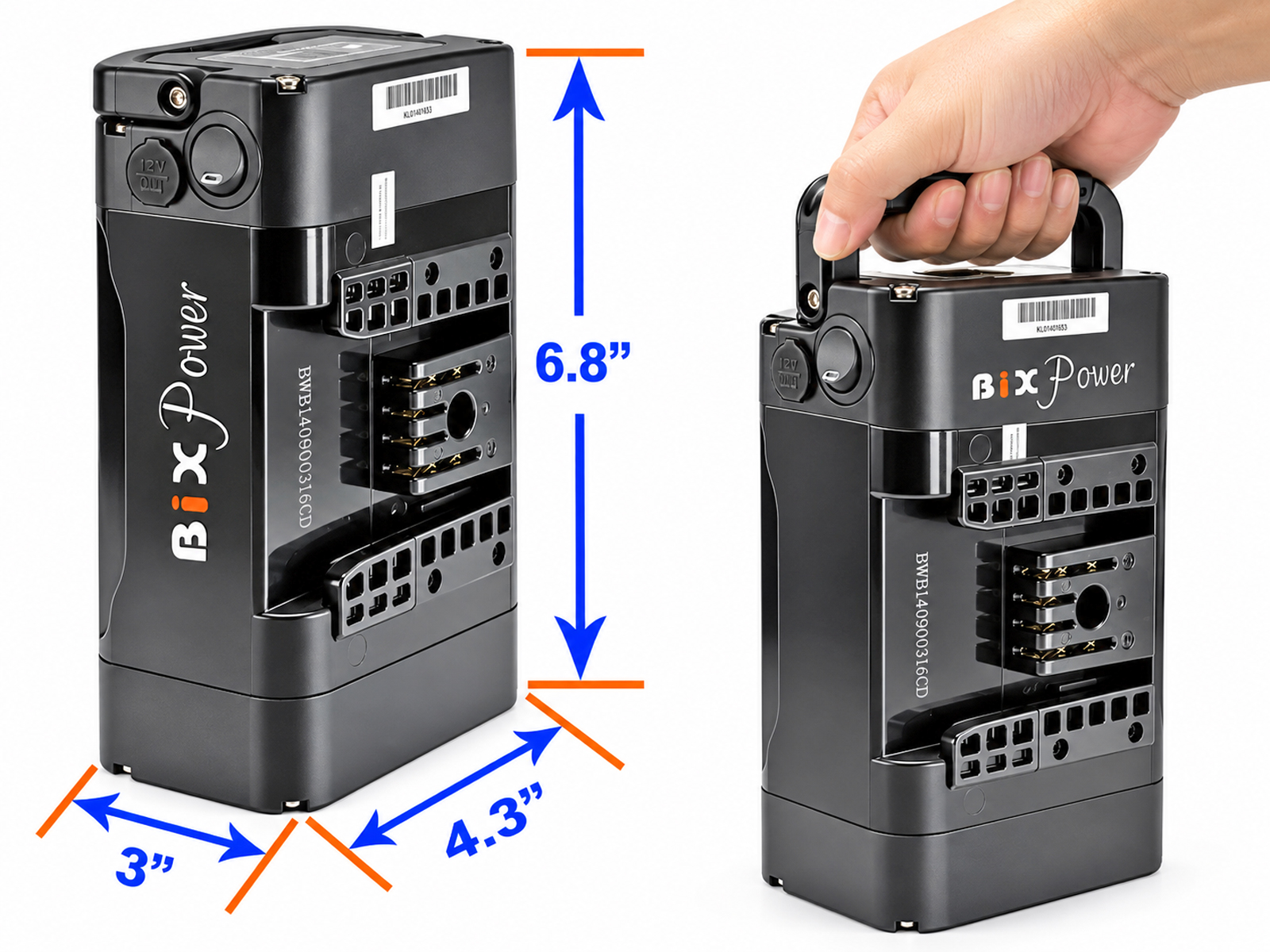
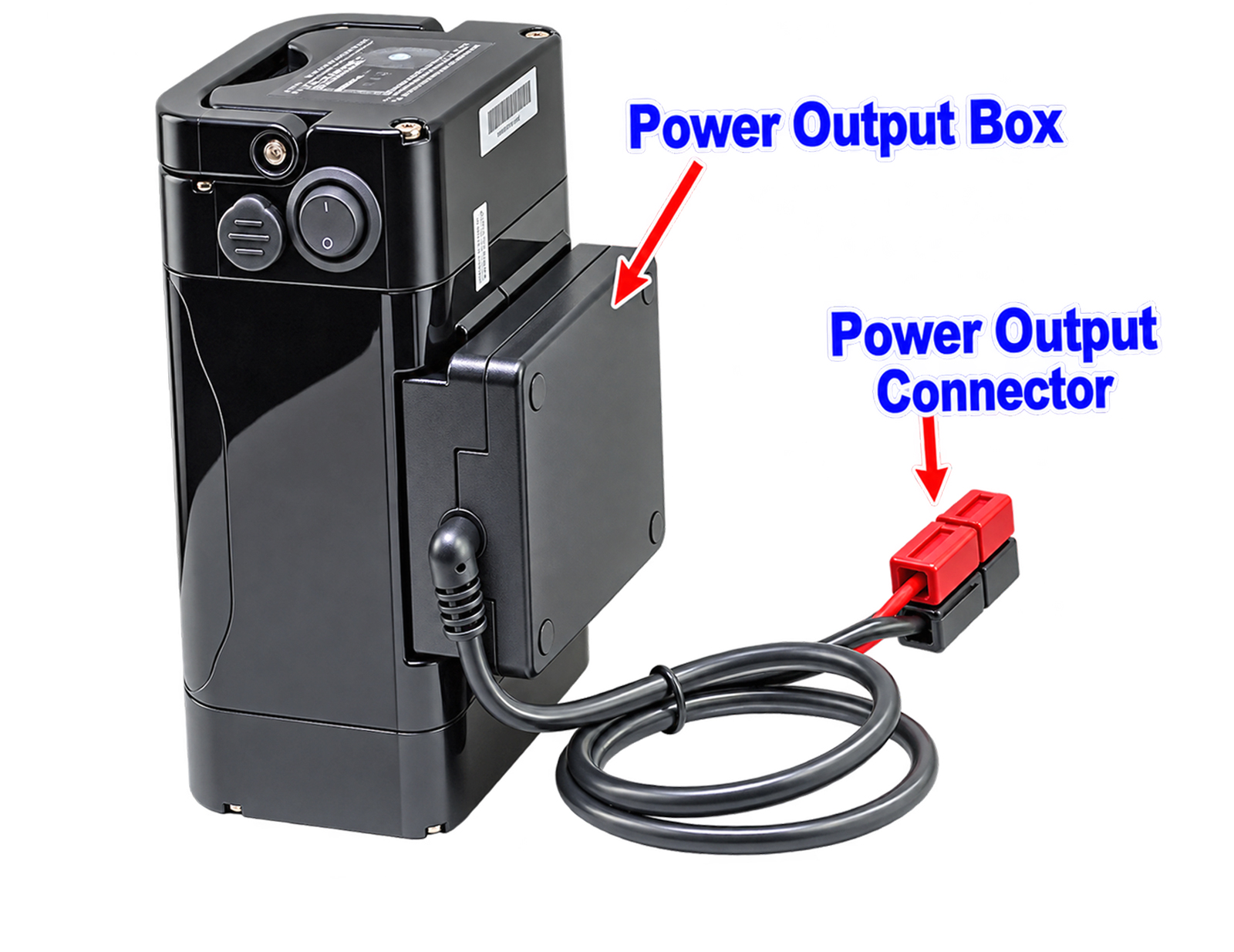
Its approximately 4.3 lb weight and compact 7.5 × 4.4 × 3-inch housing make it convenient to transport and store. The original product specifications identify Panasonic lithium-ion cells.
Compact Size and Lightweight Design
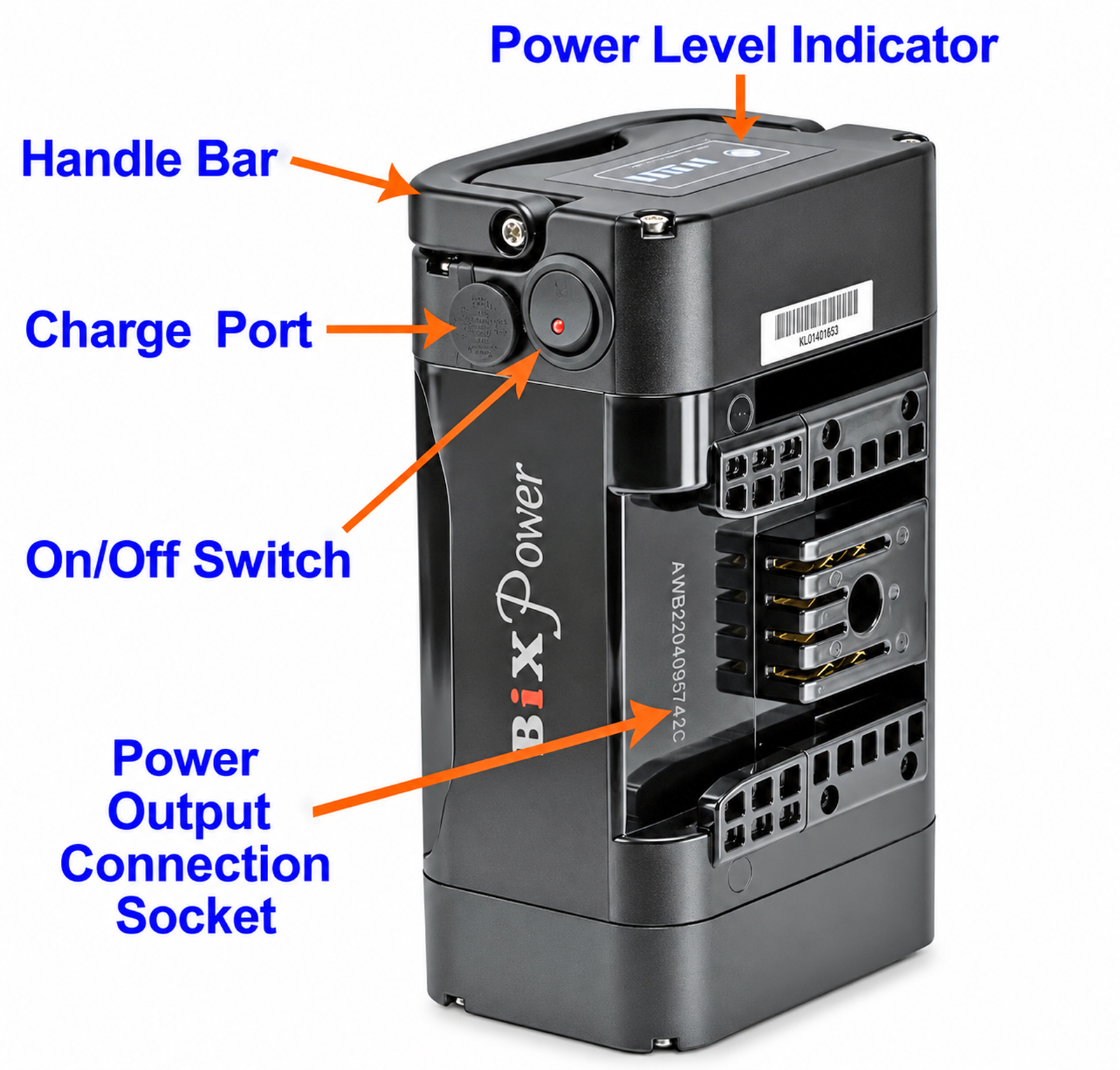
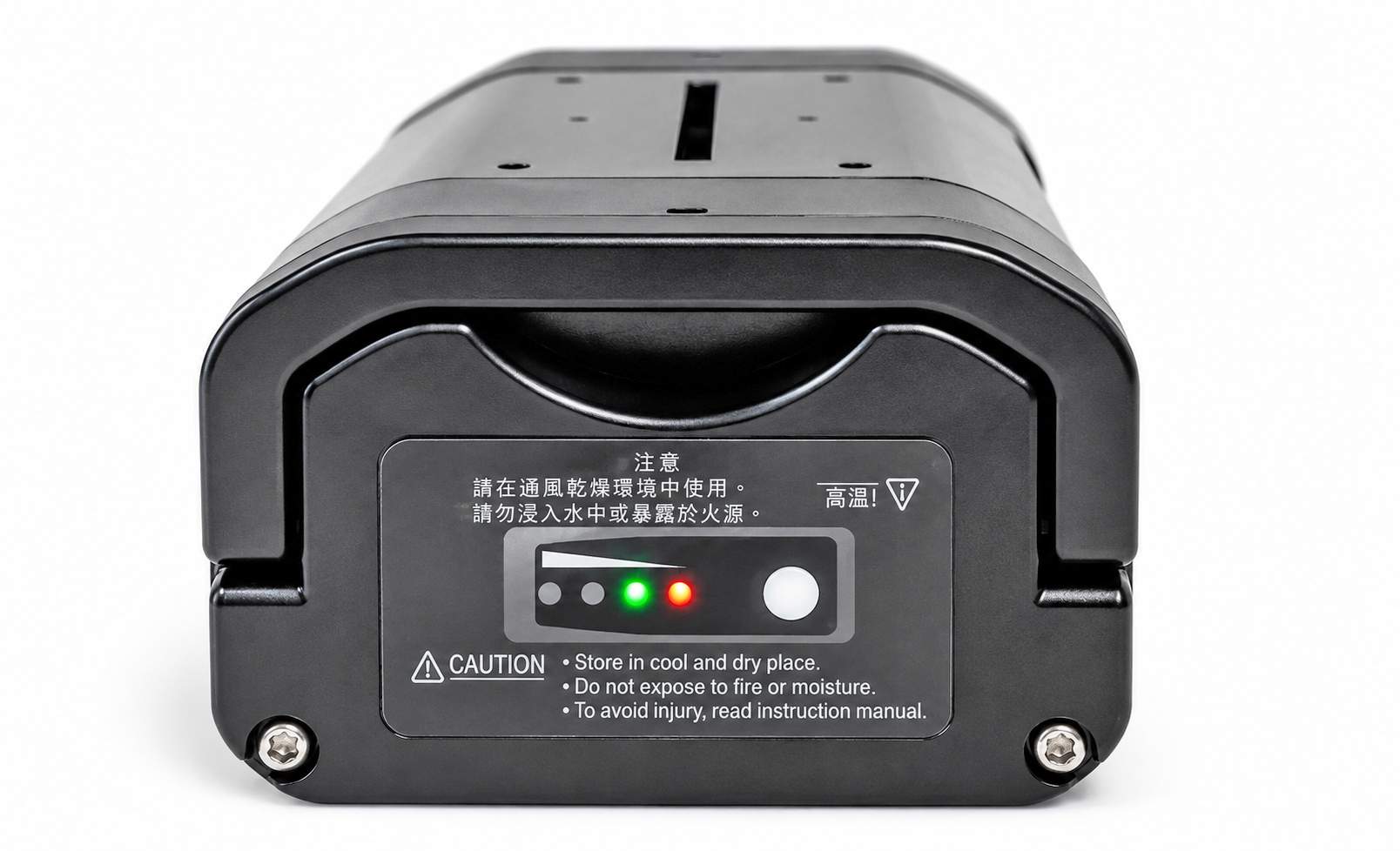
Four-Level LED Battery Indicator
The battery features a four-level LED indicator to provide a convenient visual indication of the approximate remaining battery charge.
Battery Protection Features
- Durable, water-resistant ABS plastic housing
- Built-in battery protection circuit
- Cell balancing
- Overcharge protection
- Over-discharge protection
- Overcurrent and short-circuit protection
- Temperature protection
- Internal support structure to help protect against vibration
Water-resistant construction does not mean waterproof. Do not expose the battery to rain, immersion or excessive moisture.
Battery Technical Specifications
| Battery model | BX24H99B |
| Cell brand | Premium brand |
| Chemistry | Rechargeable lithium-ion |
| Nominal voltage | 25.2V DC |
| Specified voltage range | 21V–29.5V DC |
| Rated capacity | 12.8Ah |
| Rated energy | 322Wh |
| Cell configuration | 7S4P |
| Internal resistance | 75 milliohms or less |
| Charging voltage limit | 29.4V DC |
| Maximum charging current | 2A |
| Continuous discharge current | 15A |
| Burst discharge current | 18A, up to 10 minutes as listed in original specifications |
| Dimensions | Approximately 7.5 × 4.4 × 3 inches |
| Weight | Approximately 2kg / 4.3 lb |
| Charging temperature | 0°C to 45°C |
| Discharging temperature | -20°C to 60°C |
| Storage temperature | -20°C to 40°C |
| Published cycle life | 500 cycles; test conditions not specified |
| Safety functions | Cell balancing, overcharge, over-discharge, overcurrent, temperature and secondary protection |
300W Pure Sine Wave Power Inverter
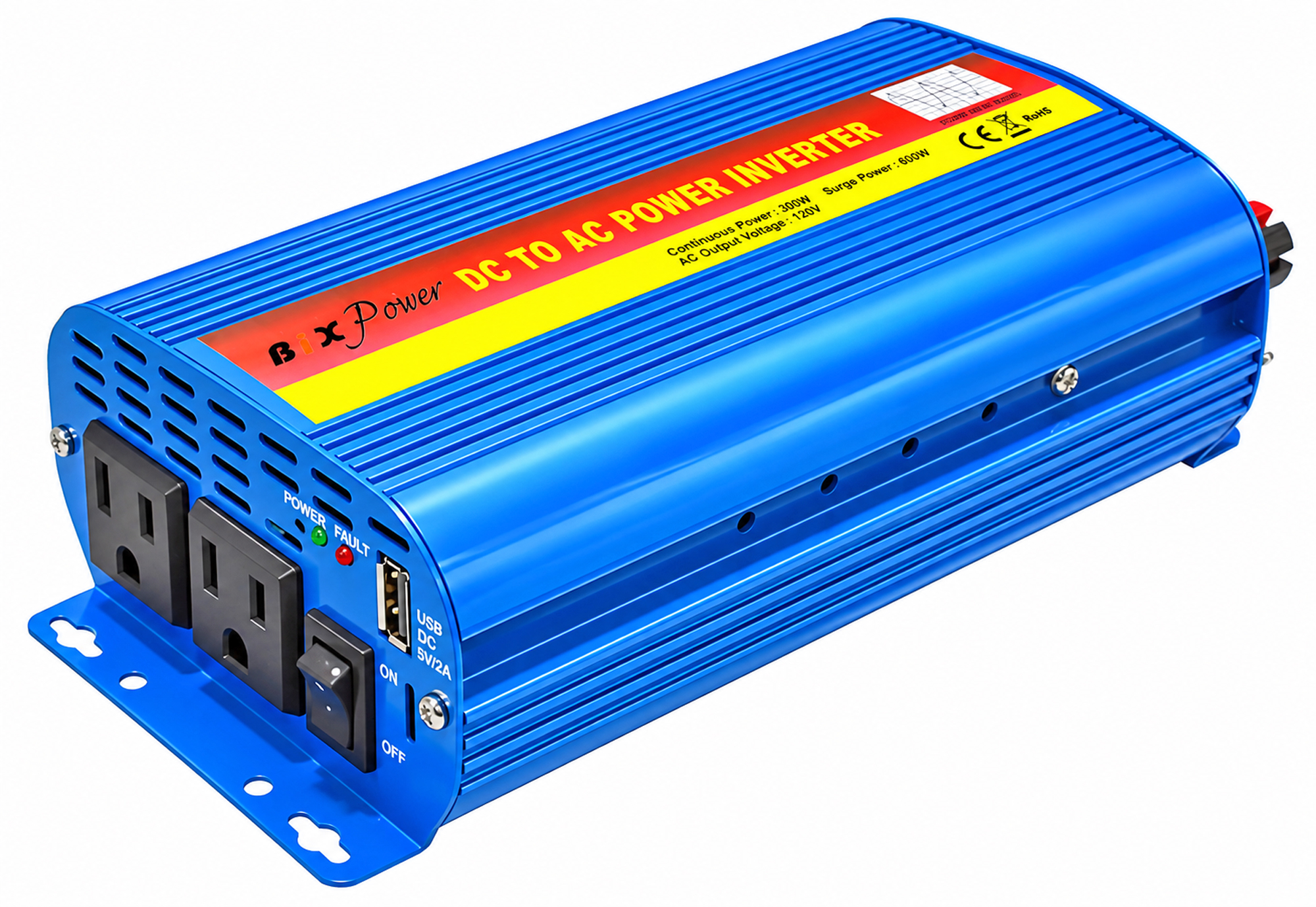
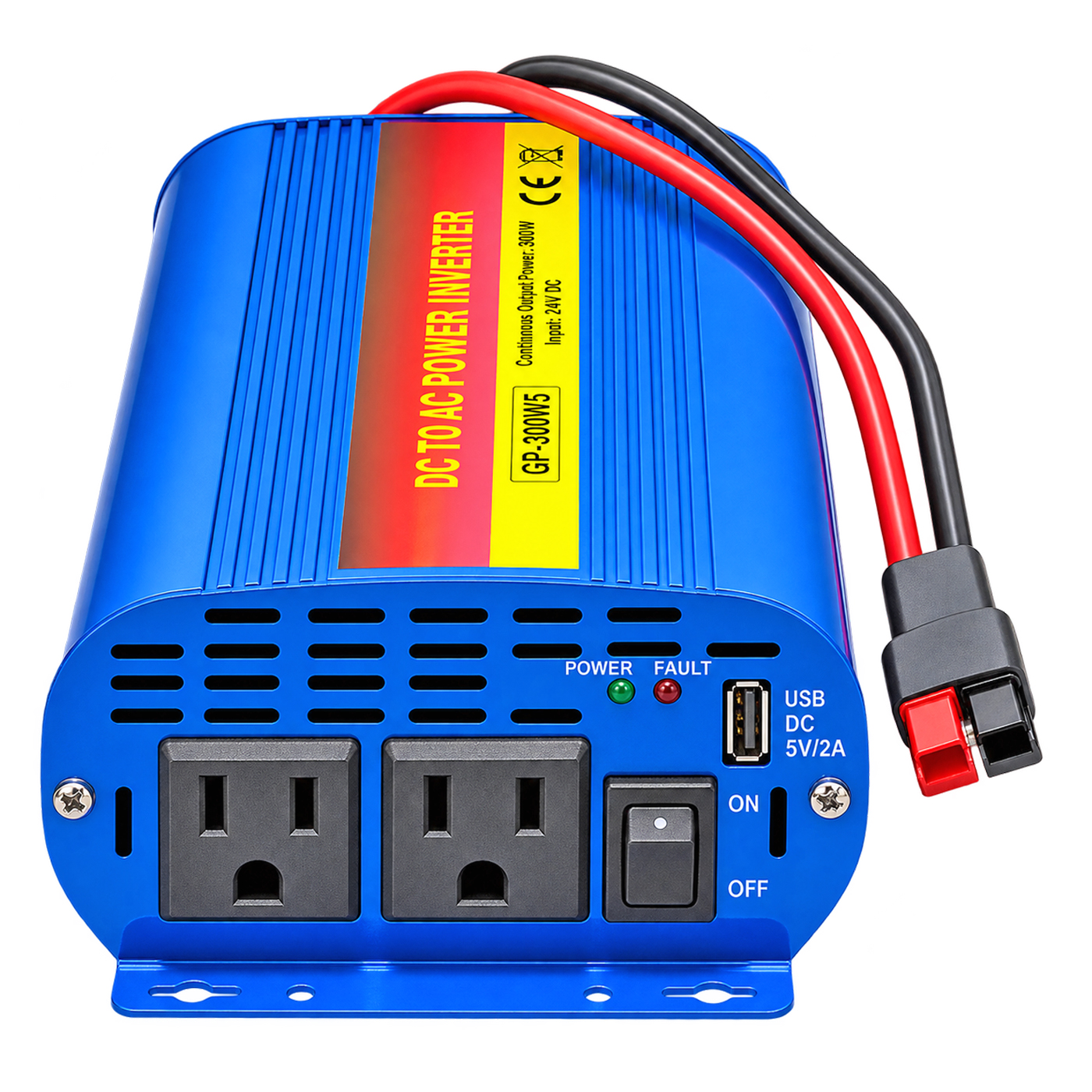
The included 300W inverter converts DC electricity from the rechargeable battery into 110V AC power at approximately 60Hz. This allows many compatible devices to operate using their original AC power adapters.
The inverter accepts approximately 20V–30V DC input, making it suitable for the included 25.2V nominal battery and other electrically compatible 24V-class battery systems.
Pure Sine Wave AC Power
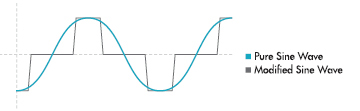
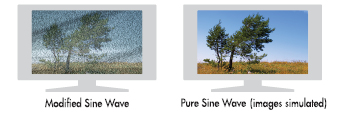
Pure sine wave output more closely resembles the smooth AC waveform supplied by utility outlets. Compared with modified sine wave inverters, pure sine wave output is generally preferable for many electronic power adapters, audio/video equipment, certain motors and devices with sensitive power electronics.
It may reduce buzzing, interference and compatibility issues in certain applications. Actual equipment performance and efficiency depend on the device.
Automatic Cooling Fan
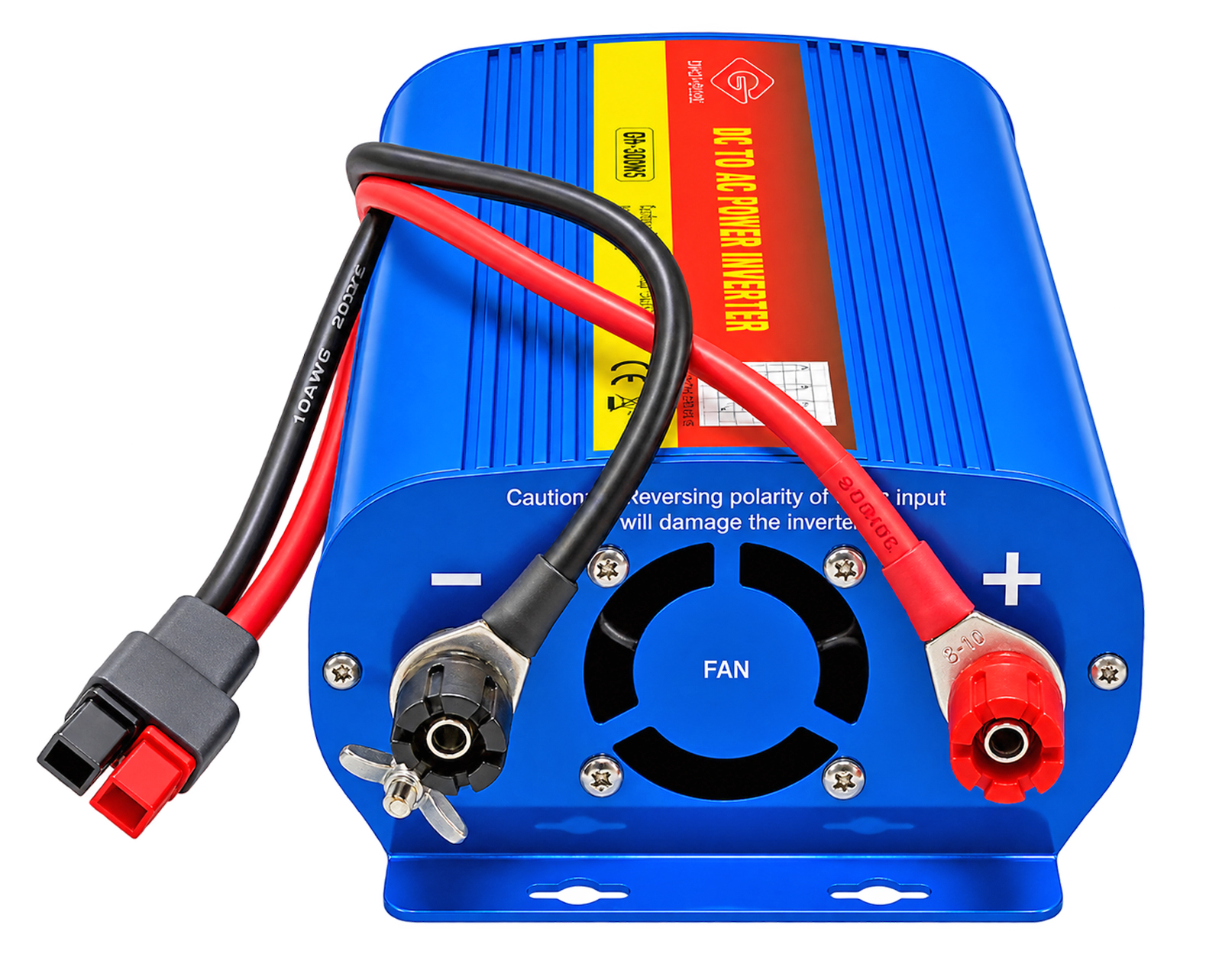
The inverter includes a temperature-controlled cooling fan that operates when internal temperature reaches its control threshold. The fan stops when the inverter cools sufficiently, helping reduce unnecessary fan operation.
Inverter Technical Specifications
| Rated continuous output | 300W |
| Peak output | 600W; duration not specified |
| Nominal DC input | 24V DC |
| DC input range | 20V–30V |
| AC output voltage | 110V AC |
| AC output frequency | 60Hz ±1% |
| Output waveform | Pure sine wave |
| Conversion efficiency | Approximately 85% used for planning; actual efficiency varies with load |
| Cooling | Temperature-controlled fan |
| Protective functions | Low/high input voltage, overload, short circuit, reverse input connection and overtemperature protection |
| Operating temperature | -10°C to 45°C |
| Storage temperature | -30°C to 70°C |
| Housing | Oxidized aluminum alloy |
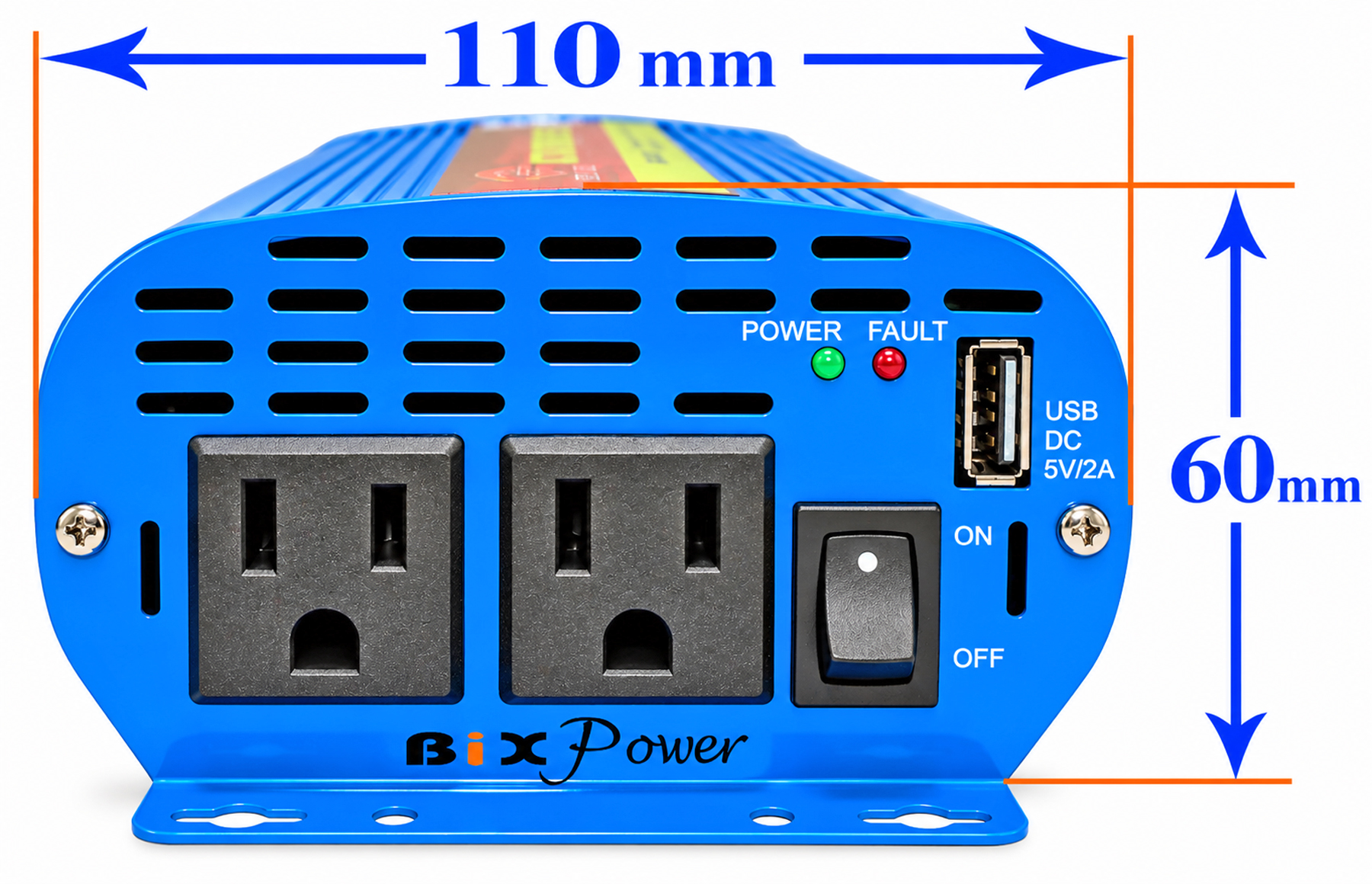
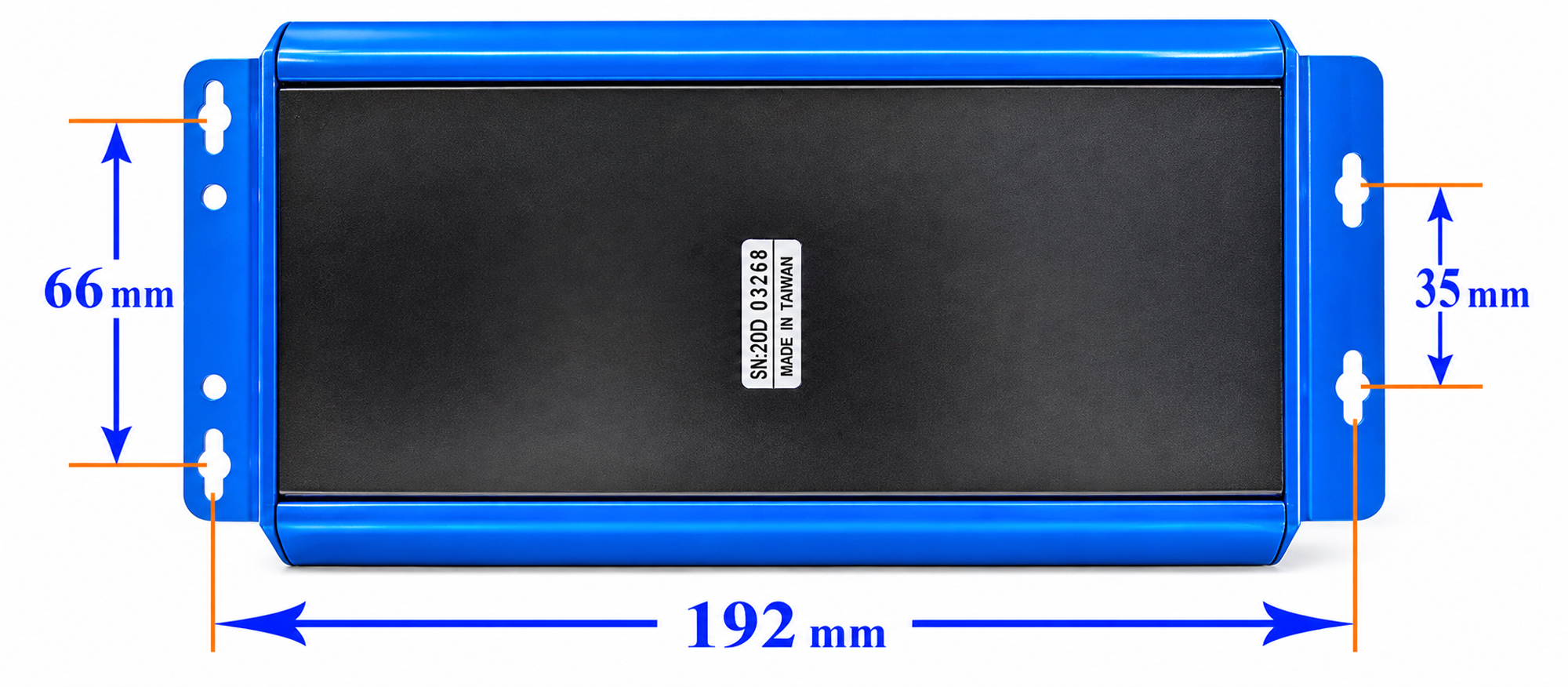
| Approximate dimensions | 7.2 × 4.3 × 2.2 inches (180 × 110 × 55mm), as listed in the original data sheet |
| Weight | Approximately 0.95kg / 2.1 lb |
Understanding Inverter Power and Battery Limitations
The inverter does not generate electricity. It converts DC electricity stored in the battery into AC electricity, with some energy lost during conversion.
For example, a 300W AC load at an assumed 85% conversion efficiency requires approximately 353W from the battery.
The XP330 battery is rated for 15A continuous discharge. At its 25.2V nominal voltage, this corresponds to approximately 378W of DC power. At 85% conversion efficiency, that would provide approximately 321W AC before accounting for other operating limits.
However, battery voltage decreases as the battery discharges. At 21V and 15A, the battery's continuous DC power is approximately 315W, equivalent to about 268W AC at 85% conversion efficiency.
Important: Although the inverter is rated for 300W continuous output, the combined system may not sustain a 300W AC load under all battery conditions. Available power depends on battery voltage, discharge limits, inverter efficiency, temperature and protection thresholds. The inverter's 600W peak rating does not mean the included battery can supply a 600W AC surge.
Estimated AC Operating Time
Actual runtime depends on the average AC load, inverter efficiency, inverter standby consumption, battery condition and operating temperature.
The estimates below use 322Wh of rated battery energy and an illustrative 85% overall energy-delivery factor.
| Average AC Load | Estimated Runtime |
|---|
| 20W | Approximately 13.7 hours |
| 40W | Approximately 6.8 hours |
| 60W | Approximately 4.6 hours |
| 100W | Approximately 2.7 hours |
| 150W | Approximately 1.8 hours |
| 200W | Approximately 1.4 hours |
| 250W | Approximately 1.1 hours |
Estimated runtime formula: 322Wh × 0.85 ÷ average AC load in watts.
These estimates are for planning only, not guaranteed operating times. At low loads, inverter idle consumption may substantially shorten runtime. At higher loads, battery discharge limits and voltage-dependent protection may stop operation earlier than the energy calculation suggests.
Extend Runtime with Additional Compatible Batteries
One of the most useful advantages of the XP330 modular design is the ability to keep additional charged batteries ready for use.
For example, two compatible 322Wh batteries provide a combined rated stored energy of approximately 644Wh when used sequentially. Three provide approximately 966Wh of total rated energy.
When the first battery is depleted, switch off the inverter, disconnect it safely and connect another charged battery. This allows the same inverter to serve multiple batteries over time.
Battery connection safety: Do not directly connect multiple batteries in series or parallel unless the manufacturer expressly approves that configuration. Additional batteries should be used individually and sequentially. Never connect or disconnect power connectors while the inverter is operating under load.
Ideal Applications
Emergency Backup Power
Provide temporary AC power for compatible networking devices, communication equipment, lighting and other small electronics during power outages.
Camping and Outdoor Activities
Operate compatible electronics, chargers and portable equipment when a household electrical outlet is unavailable.
Mobile Office and Remote Work
Power compatible laptop AC adapters, monitors, small networking equipment and other low-power office electronics.
Field and Off-Grid Applications
Use portable 110V AC power for compatible tools, test equipment and electronics within the system's electrical limits.
For medically critical or life-sustaining equipment, use a manufacturer-approved backup system. The XP330 is not represented as an uninterruptible power supply or medical-grade power source.
How to Use the XP330
- Place the battery and inverter on dry, stable surfaces with adequate ventilation.
- Make sure the inverter is switched off.
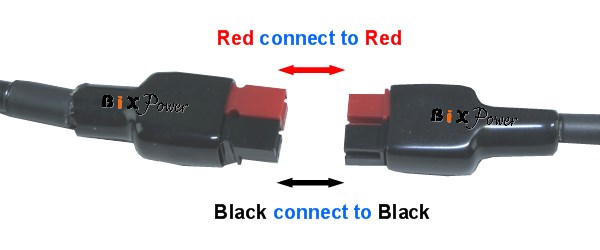
- Connect the battery output to the inverter input using the supplied compatible power connection.
- Confirm correct polarity and secure connector engagement.
- Turn on the battery output if required, then switch on the inverter.
- Connect your compatible 110V AC device or its original AC power adapter.
- When finished, turn off the inverter before disconnecting the battery.
Charging the Battery
The XP330 includes a compatible AC battery charger that accepts approximately 110V–240V AC input, as described in the original product information.
Use the supplied charger to recharge the battery according to its operating instructions. The battery's listed charging voltage limit is 29.4V, with a maximum charging current of 2A.
Charging time depends on charger output, initial charge level and battery conditions.
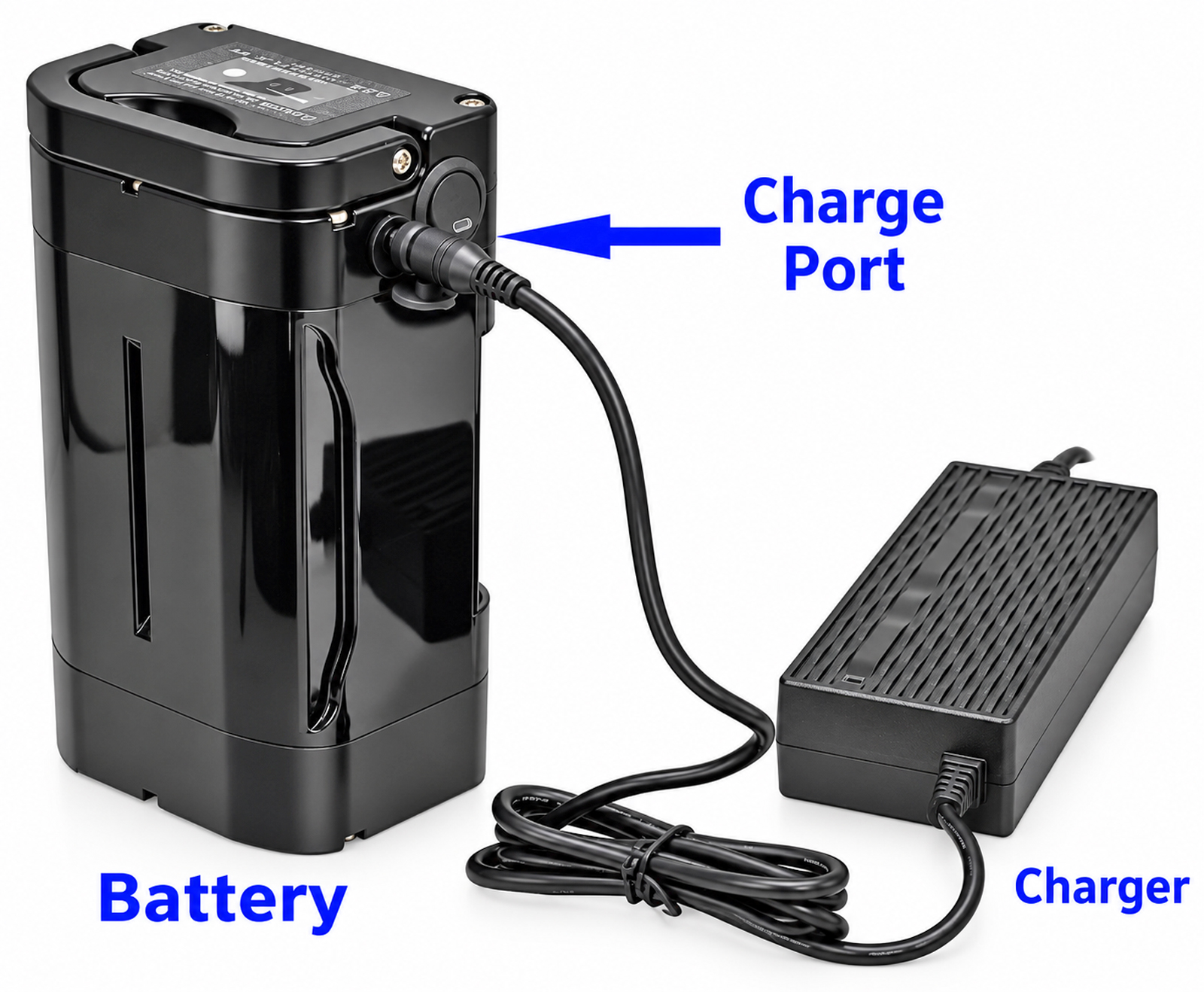
Charging safety: Use a compatible lithium-ion battery charger with appropriate voltage and current control. Do not substitute an ordinary laptop constant-voltage power adapter unless specifically approved for the battery's charging system. Charge only through the designated charging connection and within the specified temperature range.
Package Contents
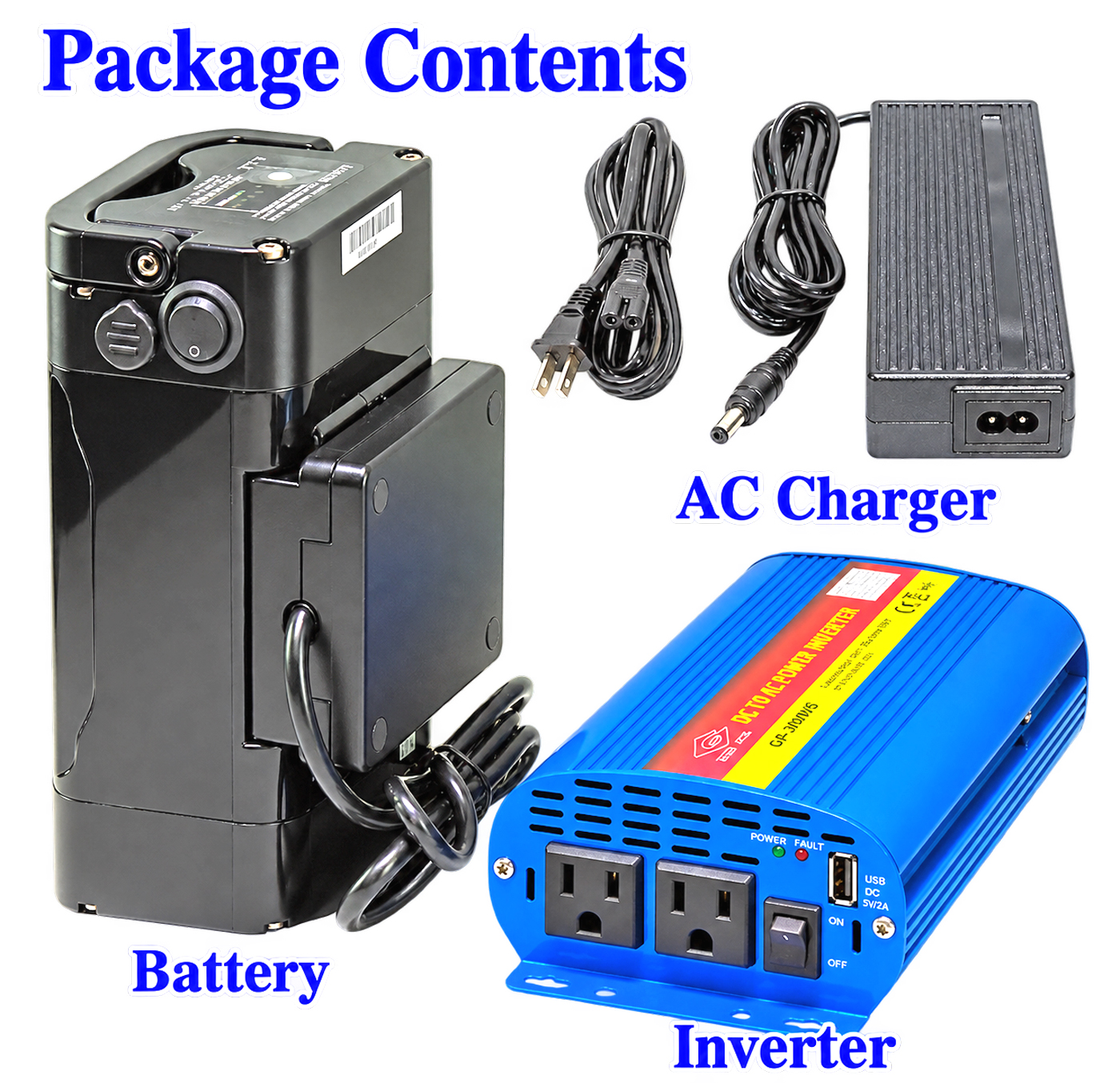
- 1 × BiXPower BX24H99B 322Wh rechargeable lithium-ion battery
- 1 × Compatible lithium-ion battery AC charger
- 1 × 300W 24V DC to 110V AC pure sine wave inverter
Refer to the selected package configuration for any additional connection accessories.
Important Safety Information
- Never short-circuit the battery output terminals.
- Observe correct polarity when connecting the battery and inverter.
- Use only appropriately rated cables and connectors.
- Do not exceed the battery discharge-current limits or inverter power ratings.
- Do not connect batteries together in series or parallel unless expressly approved.
- Turn off the inverter before changing batteries.
- Keep the system dry and provide adequate ventilation.
- Do not block inverter cooling openings.
- Use only compatible battery charging equipment.
- Do not operate damaged, swollen or overheating batteries.
- Recycle depleted lithium-ion batteries through an appropriate battery recycling facility.
Frequently Asked Questions
What makes the XP330 different from an all-in-one power station?
The XP330 uses separate battery and inverter components. This allows independent replacement, easier handling, flexible maintenance and sequential use of additional compatible batteries.
Can I replace the battery without replacing the inverter?
Yes. A compatible replacement battery can be used with the existing inverter, provided all electrical and connection requirements are met.
Can I replace or upgrade the inverter?
Yes, but the replacement inverter must be compatible with the battery's voltage range, current capability, connectors, wiring and protective requirements. A higher-rated inverter does not increase the battery's own discharge capability.
Can I use additional batteries for longer runtime?
Yes. Additional compatible charged batteries may be used one at a time. Turn off the inverter before swapping batteries. Do not directly connect multiple batteries together unless the manufacturer approves the configuration.
Is the XP330 lighter than an integrated power station?
Not necessarily in total weight. The XP330 battery weighs approximately 4.3 lb and the inverter approximately 2.1 lb. Their separate design allows easier handling of individual components.
Can the XP330 deliver 300W continuously?
The inverter is rated at 300W continuous output, but actual system output is also limited by the battery's discharge-current rating and voltage. Full 300W operation may not be available throughout the battery discharge cycle.
How long can the XP330 power a 100W device?
An illustrative estimate is approximately 2.7 hours using an 85% overall energy-delivery assumption. Actual runtime depends on inverter consumption, battery condition and operating conditions.
Can the XP330 power a laptop?
Yes, for compatible laptops whose AC adapters operate within the inverter and battery system's electrical limits. Connect the laptop's original AC adapter to the inverter's 110V AC outlet.
Why is pure sine wave power useful?
Pure sine wave AC power is generally more compatible with many electronic adapters, audio/video products and certain motor-driven devices than modified sine wave power. Always verify your equipment's requirements.
Can I charge the battery with a regular laptop power adapter?
No. Use a compatible lithium-ion battery charger designed to control the correct charging voltage and current.
Why Choose BiXPower?
BiXPower specializes in rechargeable battery systems, portable power products, DC power converters and power accessories. The XP330 combines compact lithium-ion energy storage with a modular pure sine wave inverter to provide flexible AC power for travel, outdoor activities, remote work and backup applications.
BiXPower XP330 — More Flexibility. Easier Maintenance. Power Wherever You Need It.



