BiXPower Modular Portable AC Power System
BiXPower 300Wh Portable Power Station with 300W Pure Sine Wave Inverter
Flexible Power. Replaceable Batteries. Built for Long-Term Value.
Enjoy reliable portable AC power with the BiXPower XP300AC-BX3694 modular power station. This system combines a high-capacity 300Wh rechargeable lithium-ion battery with a separate 300W pure sine wave inverter.
The inverter converts the battery's DC power into 110V AC electricity, allowing you to operate compatible electronic devices using their original AC power adapters.
Unlike many all-in-one portable power stations, the battery and inverter are separate components. This modular design makes it easier to replace batteries, service the inverter, carry additional batteries for extended runtime and adapt the system to changing power needs.
300Wh
Battery Energy
300W
Inverter Rating
110V
Pure Sine AC
7.1 lb
Battery + Inverter
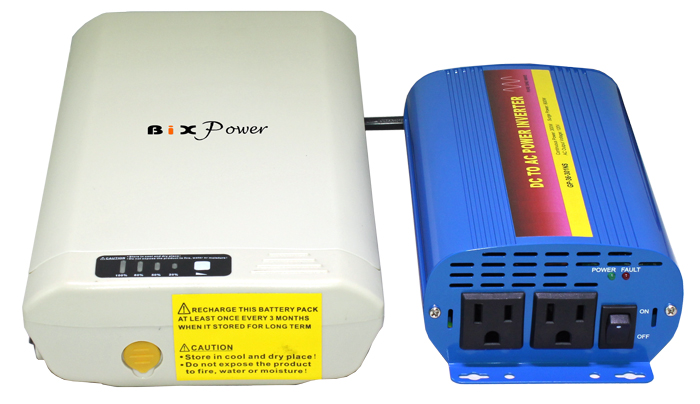 BiXPower modular power station with separate rechargeable battery and AC inverter
Portable AC Power Wherever You Need It
The BiXPower modular power station provides a convenient way to operate compatible electronic equipment when standard wall power is unavailable.
Simply connect the rechargeable battery to the inverter using the compatible battery connection, turn on the inverter and plug your electronic device or its original AC power adapter into the inverter's AC outlet.
This system is ideal for compatible laptop computers, communications equipment, portable electronics, camping accessories, small office equipment and other low-power applications.
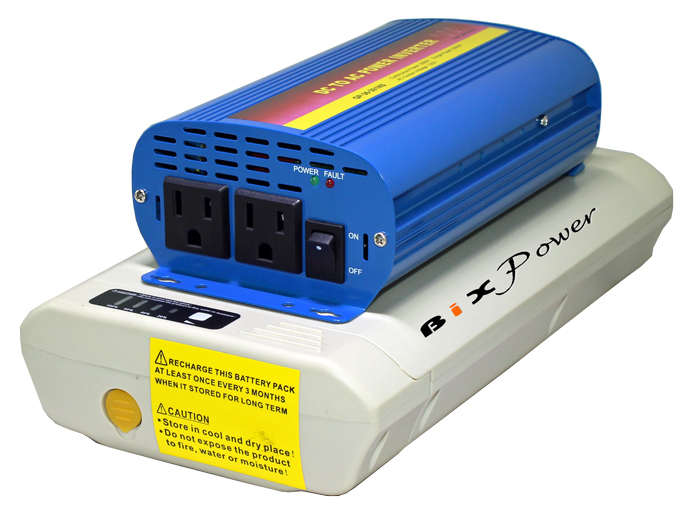
Why Choose a Separate Battery and Inverter?
Most conventional portable power stations combine the battery, inverter, charger and electronic controls into one enclosure.
Although this integrated design is convenient, it can limit flexibility when the battery ages, the inverter requires replacement or additional runtime is needed.
The BiXPower modular design separates the rechargeable battery from the inverter, providing several important practical and economic advantages.
1. Easy Battery Replacement
Every rechargeable battery gradually loses capacity with age and repeated charge cycles.
With the BiXPower modular system, you can replace the battery independently without replacing a perfectly functional inverter.
This can significantly reduce long-term replacement costs compared with integrated systems that do not support user-replaceable batteries.
2. Easy Inverter Replacement
If the inverter becomes damaged or requires service, the battery can remain in use.
You can replace the inverter independently with a compatible unit rather than replacing the complete power station.
This simplifies maintenance and helps extend the useful life of your power equipment.
3. Carry Multiple Batteries for Longer Runtime
One of the greatest advantages of a modular power station is the ability to carry additional fully charged compatible batteries.
When the first battery becomes depleted, turn off the inverter, disconnect the battery and replace it with another charged battery.
You can extend total operating time without purchasing another inverter.
4. Easier to Carry and Transport
The BX3694 battery weighs approximately 5 lb, while the inverter weighs approximately 2.1 lb.
Instead of carrying a single combined unit, you can transport the components separately.
This can make the system easier to handle, particularly when carrying equipment in bags or storing it in limited spaces.
5. Better Thermal Separation
Heat can accelerate lithium-ion battery aging. Power inverters generate heat while converting DC power into AC electricity.
Separating the inverter from the battery allows the inverter to be positioned with adequate ventilation, potentially reducing unnecessary heat exposure to the battery.
This can help support battery longevity when the system is operated and stored correctly.
6. Lower Long-Term Ownership Costs
Batteries and inverters have different operating lifetimes.
With a modular design, you may only need to replace the component that has worn out or failed.
This can be more economical than replacing an entire integrated power station.
7. Flexible Battery Capacity
The modular design provides flexibility to select compatible batteries according to your energy requirements.
Depending on the inverter's specifications and manufacturer-approved compatibility, different battery capacities may be used.
You can therefore plan for shorter or longer operating periods without permanently tying your energy storage capacity to one inverter enclosure.
8. Easier Maintenance and Troubleshooting
The battery, inverter, charger and connection cables can be inspected and tested independently.
This makes it easier for qualified personnel to identify which component requires attention.
9. Less Electronic Waste
A modular system allows functional components to remain in service when another component requires replacement.
This can reduce unnecessary disposal of working electronics and encourage responsible battery replacement and recycling.
10. More Flexible Installation
The battery and inverter can be positioned separately to suit the available installation space.
This is useful for portable equipment, custom power systems and applications where ventilation or space is limited.
Always use appropriately rated cables and follow manufacturer installation requirements.
11. Convenient Backup Planning
Keep an additional compatible battery charged and ready for emergency use.
The same inverter can be reused with each battery, providing a flexible way to prepare for power outages or extended outdoor activities.
12. Independent Component Upgrades
As your power requirements change, compatible battery or inverter components may be upgraded independently.
Any replacement must meet the required voltage, current, connector and safety specifications.
Important:
A modular system is not necessarily lighter or smaller in total than every integrated power station with the same energy capacity. Its primary advantages are separate handling, easier component replacement, maintenance flexibility and the ability to swap compatible batteries.
Modular vs. Integrated Portable Power Stations
| Feature |
BiXPower Modular System |
Typical Integrated System |
| Battery replacement |
Replace independently |
May require internal service |
| Inverter replacement |
Replace separately |
Often integrated |
| Additional runtime |
Swap compatible batteries |
Depends on expansion capability |
| Transportation |
Carry components separately |
Carry combined unit |
| Thermal management |
Separate component positioning |
Shared enclosure with designed cooling |
| Maintenance |
Independent component testing |
May require specialized repair |
| Upgrade flexibility |
Compatible components can change |
Often limited by integrated design |
| Setup convenience |
Requires connecting components |
Usually ready as one unit |
Some integrated power stations also offer replaceable batteries or expandable capacity. Actual advantages depend on the specific product design.
High-Capacity 300Wh Rechargeable Lithium-Ion Battery
The included BiXPower BX3694 battery provides approximately 300 watt-hours of rated energy in a compact and lightweight rechargeable lithium-ion battery pack.
The battery is designed for 36V-class applications, with a detailed nominal voltage specification of 37V and rated capacity of 8.4Ah.
Its compact construction makes it suitable for portable power applications where size and weight are important.
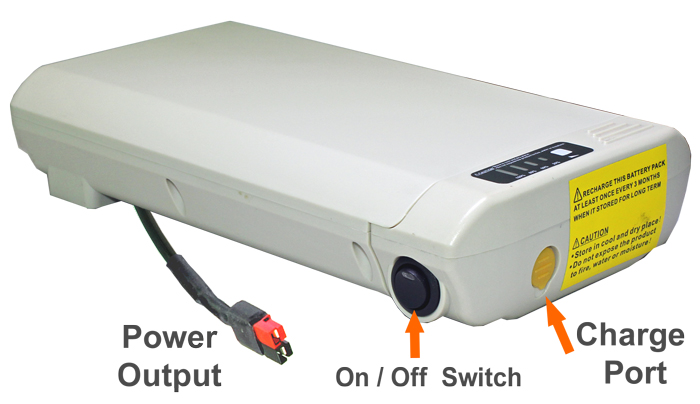
Compact Battery Design
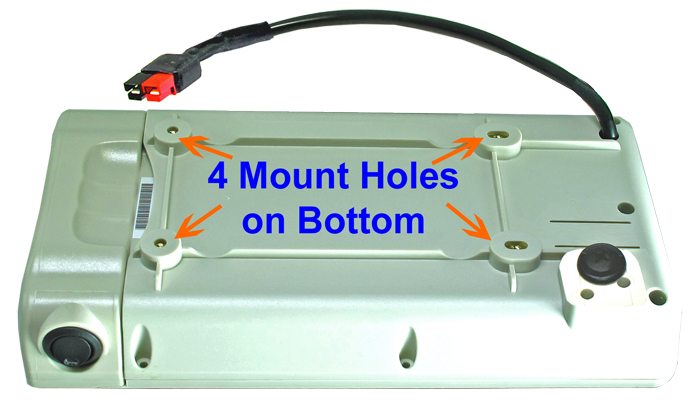
The BX3694 battery measures approximately 10.2 × 6 × 2.2 inches and weighs approximately 5 lb.
Its slim rectangular housing makes it convenient to carry, store and position in portable equipment installations.
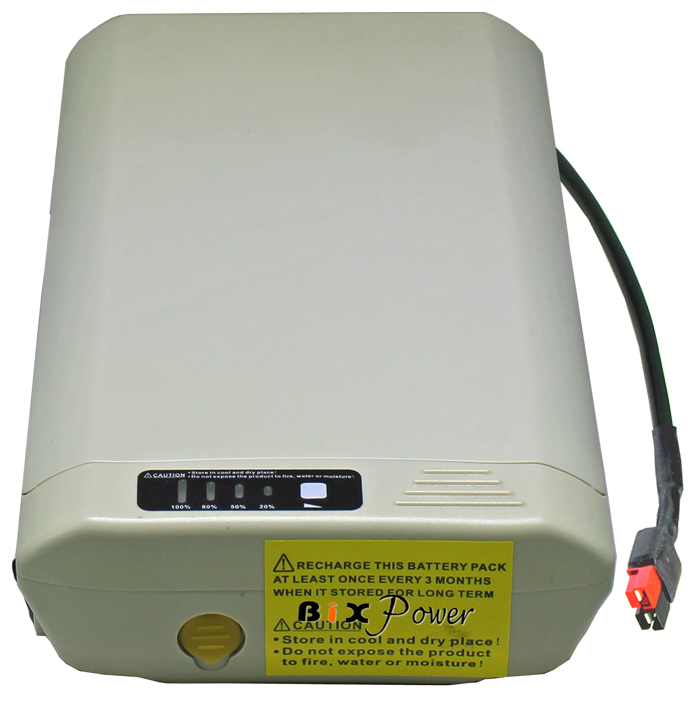
Durable Battery Construction
Why Lithium-Ion Instead of Lead-Acid?
Rechargeable lithium-ion batteries offer several advantages over traditional sealed lead-acid batteries, particularly in portable applications.
Lithium-ion batteries generally have higher energy density, allowing comparable energy storage with substantially less weight and volume.
For example, the BX3694 battery weighs approximately 5 lb. A comparable traditional lead-acid battery system may weigh considerably more, depending on its usable capacity and design.
| Feature |
Lithium-Ion Battery |
Sealed Lead-Acid Battery |
| Energy density |
Generally higher |
Generally lower |
| Weight |
Usually much lighter for comparable energy |
Typically heavier |
| Size |
More compact |
Often bulkier |
| Cycle life |
Often longer, depending on chemistry and use |
Varies with depth of discharge |
| Voltage behavior |
Often maintains voltage better during discharge |
Greater voltage sag under heavy load |
| Usable energy |
Often supports deeper discharge within specifications |
Frequent deep discharge may shorten life |
| Maintenance |
No electrolyte maintenance |
Sealed types also require little maintenance |
| Charging |
Requires compatible lithium-ion charger |
Requires compatible lead-acid charger |
| Recycling |
Specialized battery recycling required |
Established lead-acid recycling programs |
Actual performance depends on battery chemistry, temperature, charge and discharge rates, operating conditions and product design.
Built-In Battery Safety Features
The BX3694 battery includes an internal protection circuit designed to help protect the battery during charging and discharging.
- Cell balancing
- Overcharge protection
- Over-discharge protection
- Overcurrent protection
- Short-circuit protection
- Temperature protection
- Secondary protection functions
- Durable, water-resistant ABS plastic casing
- Internal structural support against vibration
These protective features help reduce risks associated with abnormal electrical conditions but do not eliminate the need for proper handling and charging.
BX3694 Battery Technical Specifications
| Battery Model | BX3694 |
| Cell Brand | Panasonic, as listed in original specifications |
| Battery Chemistry | Rechargeable lithium-ion |
| Nominal Voltage | 37V DC (36V-class battery) |
| Minimum Voltage | 30V DC |
| Maximum Voltage | 42.5V DC |
| Rated Capacity | 8.4Ah |
| Rated Energy | Approximately 300Wh |
| Cell Configuration | 10S3P |
| Internal Resistance | 75 milliohms or less |
| Charge Voltage Limit | 42.5V |
| Maximum Charge Current | 2A |
| Continuous Discharge Current | 10A |
| Burst Discharge Current | 13A, up to 10 minutes per original specification |
| Dimensions | 260 × 148 × 56mm (approximately 10.2 × 6 × 2.2 inches) |
| Weight | Approximately 2.3kg / 5 lb |
| Charging Temperature | 0°C to 45°C |
| Discharging Temperature | -20°C to 60°C |
| Storage Temperature | -20°C to 40°C |
| Published Cycle Life | 500 cycles; test conditions not specified |
| Protection | Cell balancing, overcharge, over-discharge, overcurrent and temperature protection |
300W Pure Sine Wave DC to AC Power Inverter
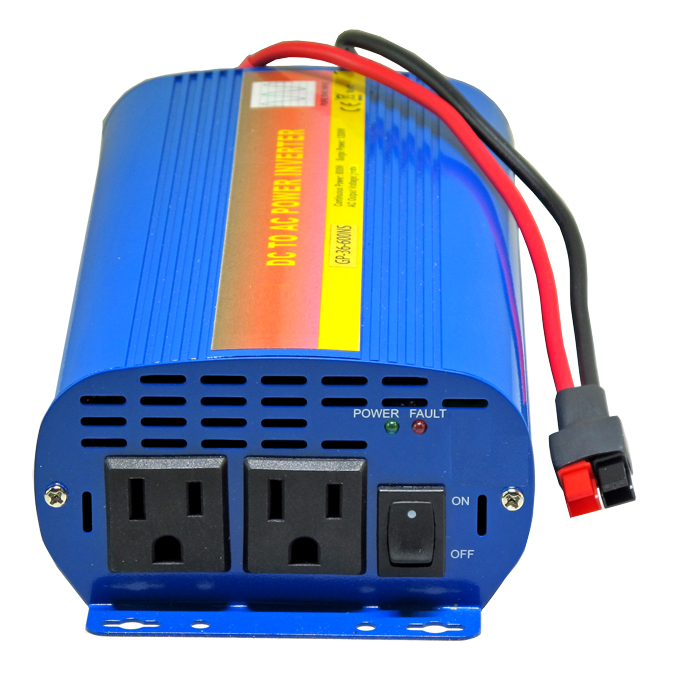
The included inverter converts DC electricity from the rechargeable battery into approximately 110V AC electricity at 60Hz.
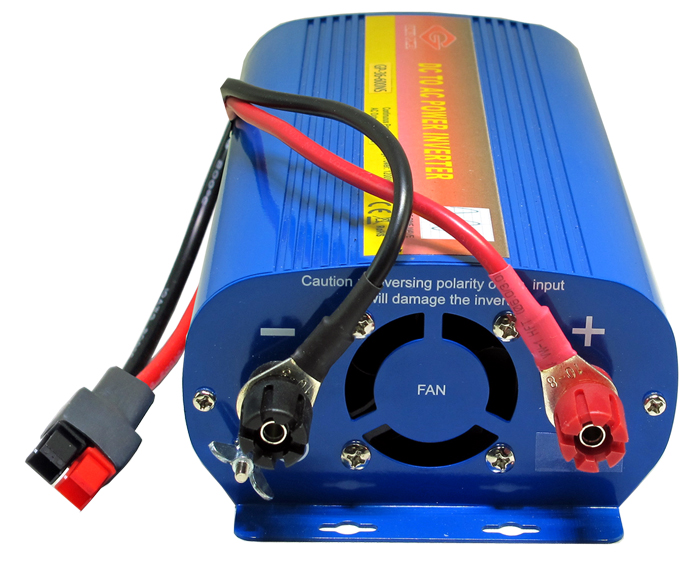
It is designed for compatible 36V-class batteries with an operating input range of 30V to 45V DC.
The inverter provides 300W rated AC output, subject to the connected battery's voltage, discharge-current limits and other operating conditions.
Convenient AC Output
Battery Input Connection
Compact and Lightweight Construction
The inverter weighs approximately 2.1 lb and features an aluminum alloy housing.
Its compact design makes it convenient for portable power applications, temporary installations and mobile equipment.
Why Pure Sine Wave Power Matters
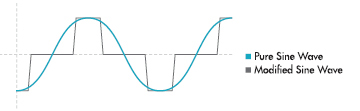
A pure sine wave inverter produces AC electricity with a waveform that closely resembles the electricity supplied by household wall outlets.
This is generally preferable to modified sine wave power for many sensitive electronic devices.
Pure sine wave output can help improve compatibility with electronic power adapters, audio/video equipment, certain motors, battery chargers and other equipment that may not operate properly on modified sine wave power.
Depending on the device, pure sine wave power may also reduce electrical buzzing and interference.
300W Inverter Technical Specifications
| Rated Output Power | 300W |
| Nominal DC Input | 36V DC |
| DC Input Range | 30V–45V |
| AC Output Voltage | 110V AC |
| Output Frequency | 60Hz ±1% |
| Output Waveform | Pure sine wave |
| Efficiency | 85% or higher as listed in original specification; varies by load |
| Published No-Load Current | 0.5A |
| Cooling | Fan cooling |
| Protection | Input under/overvoltage, overload, short circuit, reverse input connection and overtemperature |
| Operating Temperature | -10°C to 45°C |
| Operating Environment | Dry and adequately ventilated |
| Housing Material | Oxidized aluminum alloy |
| Dimensions | Approximately 180 × 110 × 55mm (7.2 × 4.3 × 2.2 inches); verify before publication |
| Weight | Approximately 0.95kg / 2.1 lb |
Understanding the 300W Output Rating
The inverter is rated for 300W AC output. However, the maximum usable output of the complete power station depends on the battery's discharge-current rating, battery voltage and inverter conversion efficiency.
The BX3694 battery is rated for 10A continuous discharge. At its specified 37V nominal voltage, this corresponds to approximately 370W DC input power.
At an assumed 85% inverter efficiency, approximately 315W AC could theoretically be available under nominal conditions, subject to the inverter's own 300W output rating.
As the battery voltage decreases, the maximum available AC output may also decrease.
For example, at 30V battery voltage and 10A discharge current, the battery can supply approximately 300W DC. At 85% efficiency, this corresponds to approximately 255W AC.
Important:
Although the inverter is rated for 300W, the complete battery-and-inverter system may not sustain a full 300W AC load throughout the battery's entire discharge cycle. Actual output depends on battery voltage, current limits, temperature and protection thresholds.
Estimated Battery Runtime
The BX3694 battery stores approximately 300Wh of rated energy.
Actual AC runtime depends on the connected device's average power consumption, inverter conversion losses, battery condition, temperature and inverter standby consumption.
The following estimates use an illustrative 85% energy-delivery factor, without separately accounting for inverter no-load consumption.
| Average AC Load |
Estimated Runtime |
| 20W | Up to approximately 12.8 hours |
| 40W | Up to approximately 6.4 hours |
| 60W | Up to approximately 4.3 hours |
| 100W | Up to approximately 2.6 hours |
| 150W | Up to approximately 1.7 hours |
| 200W | Up to approximately 1.3 hours |
| 250W | Up to approximately 1.0 hour |
Illustrative calculation:
300Wh × 0.85 ÷ average AC load in watts.
These are theoretical estimates rather than guaranteed operating times. Actual runtime may be substantially shorter, especially at low loads, because the inverter itself consumes power.
The original inverter specification lists a no-load current of 0.5A. At 36V, this corresponds to approximately 18W of idle DC consumption if that specification is accurate.
At higher AC loads, battery discharge-current and voltage limitations may also shorten runtime.
Extend Runtime with Additional Batteries
The modular design allows additional compatible charged batteries to be carried and used sequentially.
For example:
- One 300Wh battery provides 300Wh of rated stored energy.
- Two 300Wh batteries provide a combined 600Wh of rated energy when used sequentially.
- Three 300Wh batteries provide a combined 900Wh of rated energy when used sequentially.
- Four 300Wh batteries provide a combined 1,200Wh of rated energy when used sequentially.
You can reuse the same inverter with each battery, avoiding the need to purchase a complete additional power station.
This is particularly convenient for camping, extended fieldwork, outdoor events, remote work and emergency backup planning.
Battery Connection Safety:
Use additional batteries individually and sequentially. Turn off the inverter before changing batteries. Do not connect multiple batteries in series or parallel unless expressly approved by the battery manufacturer.
Ideal Applications
Emergency Backup Power
Provide temporary AC power for compatible networking devices, communications equipment, lighting and small electronics during power outages.
Camping and Outdoor Activities
Operate compatible electronic accessories, chargers and portable equipment when standard wall power is unavailable.
Laptops and Mobile Offices
Power compatible laptop AC adapters and small office electronics while working remotely.
Photography and Field Equipment
Provide portable AC power for compatible camera chargers, test equipment and field electronics.
Communications Equipment
Support compatible communication devices and small networking systems during temporary outages or remote operations.
Portable and Off-Grid Projects
Use AC electricity for compatible low-power devices in locations without convenient utility power.
For medically critical or life-sustaining equipment, use a manufacturer-approved backup power solution. This product is not represented as a certified medical-grade power source or an uninterruptible power supply.
How to Use the Portable Power Station
- Place the battery and inverter on dry, stable surfaces with adequate ventilation.
- Make sure the inverter is turned off.
- Connect the battery output to the inverter's DC input using the supplied compatible battery connection.
- Verify correct polarity and secure connector engagement.
- Turn on the inverter.
- Connect your compatible 110V AC device or its original AC power adapter.
- When finished, switch off the inverter before disconnecting the battery.
Charging the Battery
The package includes a compatible AC battery charger for charging the BX3694 rechargeable lithium-ion battery.
The battery specifications list a charging voltage limit of 42.5V and maximum charging current of 2A.
Use the supplied charger according to its operating instructions. Charging time depends on the charger's actual output, remaining battery capacity and operating conditions.
Important Charging Information:
A lithium-ion battery charger is different from a standard laptop AC power adapter. A compatible lithium-ion charger controls charging voltage and current according to the battery's charging requirements. Do not substitute an ordinary constant-voltage laptop adapter unless the battery manufacturer expressly approves it.
Package Contents
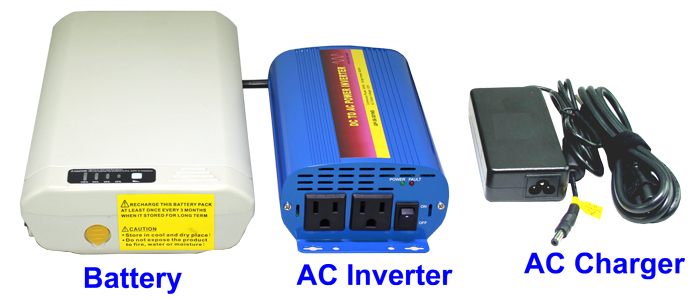 BiXPower modular portable power station package
- One BiXPower BX3694 36V-class 300Wh rechargeable lithium-ion battery
- One compatible AC lithium-ion battery charger
- One 300W 36V DC to 110V AC pure sine wave inverter with special battery connection box
Important Safety Information
- Never short-circuit the battery output terminals.
- Always observe correct DC input polarity.
- Use only compatible, properly rated cables and connectors.
- Do not exceed the battery's discharge-current limits.
- Do not exceed the inverter's rated output power.
- Turn off the inverter before changing batteries.
- Do not connect multiple batteries in series or parallel without manufacturer approval.
- Keep the inverter dry and adequately ventilated.
- Do not block inverter cooling vents.
- Use only compatible lithium-ion battery charging equipment.
- Do not charge or operate a damaged, swollen or overheating battery.
- Charge the battery only within its specified charging temperature range.
- Recycle depleted lithium-ion batteries through an appropriate battery recycling facility.
Frequently Asked Questions
What is the advantage of a modular portable power station?
The battery and inverter are separate components. This allows easier battery replacement, independent inverter maintenance, flexible transportation and the ability to extend runtime by swapping additional compatible batteries.
Can I replace the battery without replacing the inverter?
Yes. The battery can be replaced independently with a compatible battery that meets the inverter's voltage, discharge-current, connector and protection requirements.
Can I replace the inverter separately?
Yes. A compatible inverter can be replaced independently without replacing a functional battery.
Can I carry multiple batteries for longer runtime?
Yes. Additional compatible charged batteries can be used one at a time. Turn off the inverter before disconnecting one battery and connecting another.
Is this system lighter than an integrated power station?
Not necessarily in total weight. The BX3694 battery weighs approximately 5 lb and the inverter weighs approximately 2.1 lb. The advantage is that the components can be carried separately.
Can this system provide 300W continuously?
The inverter is rated for 300W output, but the complete system's available AC power depends on battery voltage, discharge-current limits, inverter efficiency and operating conditions. Full 300W output may not be available throughout the discharge cycle.
How long can the battery power a 100W device?
A simple energy calculation suggests approximately 2.6 hours using an illustrative 85% energy-delivery factor. Actual runtime will be shorter when inverter idle consumption and other operating losses are included.
Can I power a laptop with this power station?
Yes, for compatible laptops whose original AC adapters operate within the power station's electrical limits. Connect the laptop's AC adapter to the inverter's 110V AC outlet.
What is a pure sine wave inverter?
A pure sine wave inverter converts DC electricity into AC electricity with a smooth waveform similar to utility power. It is generally more compatible with many sensitive electronic devices than modified sine wave power.
Can I use another 36V battery with this inverter?
Only if the battery is approved as compatible and meets the inverter's input voltage, current, protection, connector and polarity requirements. Nominal voltage alone does not guarantee compatibility.
Can I connect multiple batteries together?
Do not connect batteries in series or parallel unless the manufacturer expressly approves that configuration. Additional batteries can be used individually and sequentially.
Can I use a laptop AC adapter to charge the battery?
No. Use a compatible lithium-ion battery charger with the appropriate charging voltage and current control, unless the battery manufacturer specifically approves another charging method.
Can this power station be used for emergency backup?
Yes, for compatible noncritical electronic devices within the system's electrical limits. It is not represented as an uninterruptible power supply or certified medical-grade backup power system.
Why Choose BiXPower?
BiXPower specializes in rechargeable battery systems, portable power products, DC power converters and power accessories.
Our modular battery and inverter solutions provide greater flexibility for portable power applications, allowing customers to replace components independently, extend runtime with compatible spare batteries and reduce unnecessary equipment replacement.
Flexible Power. Replaceable Batteries. Built for Long-Term Value.
Choose the BiXPower XP300AC-BX3694 modular portable power station for convenient 110V pure sine wave AC power, easy battery replacement, flexible maintenance and expandable runtime through sequential use of additional compatible batteries.


